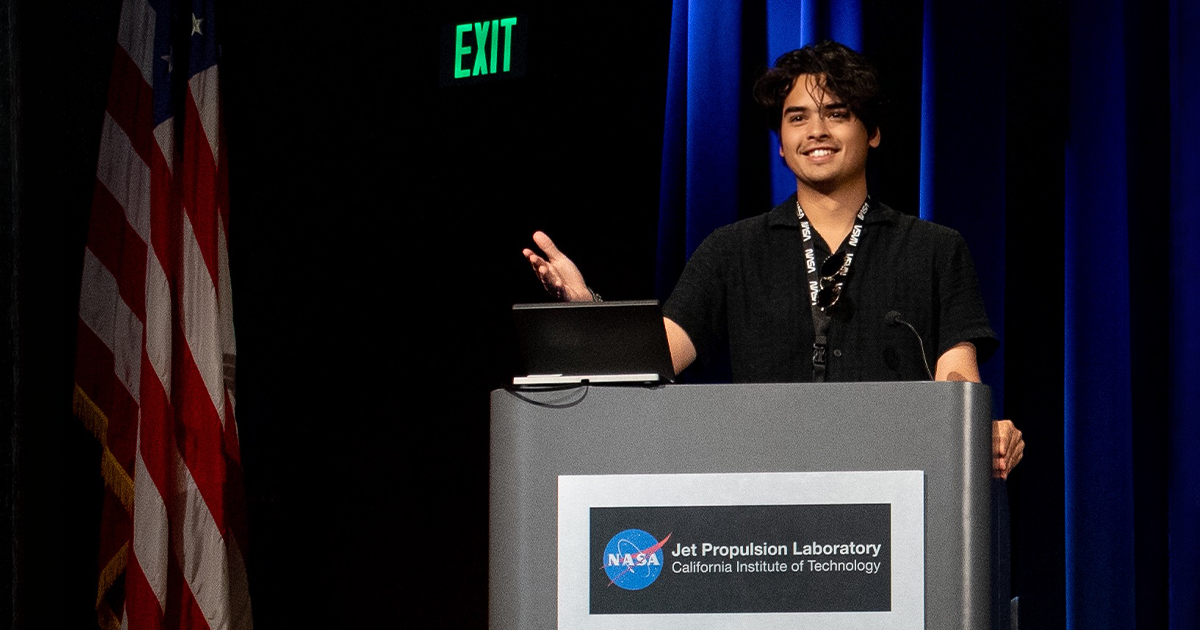
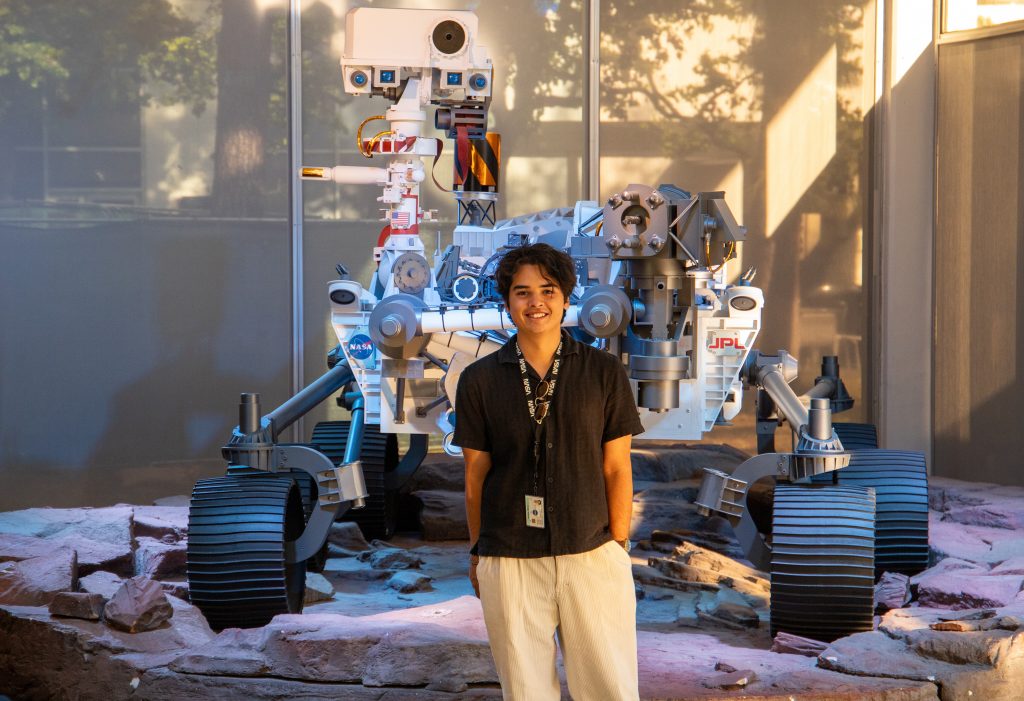
Yani Lach is a PhD candidate in astrobiology at The Australian National University (ANU). When an APR.Intern research placement at NASA’s Jet Propulsion Laboratory (JPL) landed in his inbox, he jumped at the chance. Fresh from completing his initial five-month placement, Yani spoke to APR.Intern from his home in California.
Childhood
Yani has long been fascinated by science. In fact, it’s been so long that he struggles to recall the eureka moment that first sparked his love for the discipline. “It was a long, long time ago,” he pauses, before recalling, “I do remember reading this science book as a kid and there was this tiny section in the corner that read: ‘Did you know that time doesn’t necessarily flow at the same rate everywhere?’ That blew my mind — it upended my conviction that something which I understood to be constant was, in fact, variable… it sparked my curiosity.
“What makes astronomy so exciting is that it’s the science of the universe, right? The traditional sciences are focused on this one planet we happen to live on, but there’s a whole universe out there to investigate.”
“I’m using the astrobiology connection to integrate my NASA findings with my PhD research to make a coherent narrative.”
Yani Lach, ANU
Research
Having graduated with a Bachelor of Science in Astrophysics from Monash University, Yani moved to ANU in Canberra in 2024 to begin his astronomy postgraduate research. He believes there are few careers which offer the same opportunity to push the boundaries of human knowledge.
“In astrobiology, we want to understand if life exists elsewhere in the universe, and how it originated here on Earth,” he says. “The idea that you’re working on the very edge of human knowledge is such an exciting and motivating concept.”
SRN & APR.Intern
Just one year into his PhD work at ANU, Yani found himself California-bound, preparing himself for work at NASA’s Jet Propulsion Laboratory. It was a once-in-a-lifetime opportunity made possible by the New South Wales (NSW) Government-funded NSW Space Research Network (SRN) — a university-led initiative designed to enhance NSW space industry capability through collaboration with industry academic research institutions and government.
APR.Intern, who delivered the internship, was Yani’s first point of contact for the role, “A member of our Astronomy School forwarded me an email from APR.Intern. When I read that it was an astrobiology project, I was like, this is something I have to apply for.”
Beyond the prestige of researching at NASA, a key motivation for Yani was the scarcity of comparable opportunities in Australia. “It didn’t take much convincing from my mates to send in the application as openings in my field don’t come along every day in Australia. While the prospect of working at NASA’s JPL was obviously exciting, I would have applied for a similar research project no matter where it was.”
 PhD work
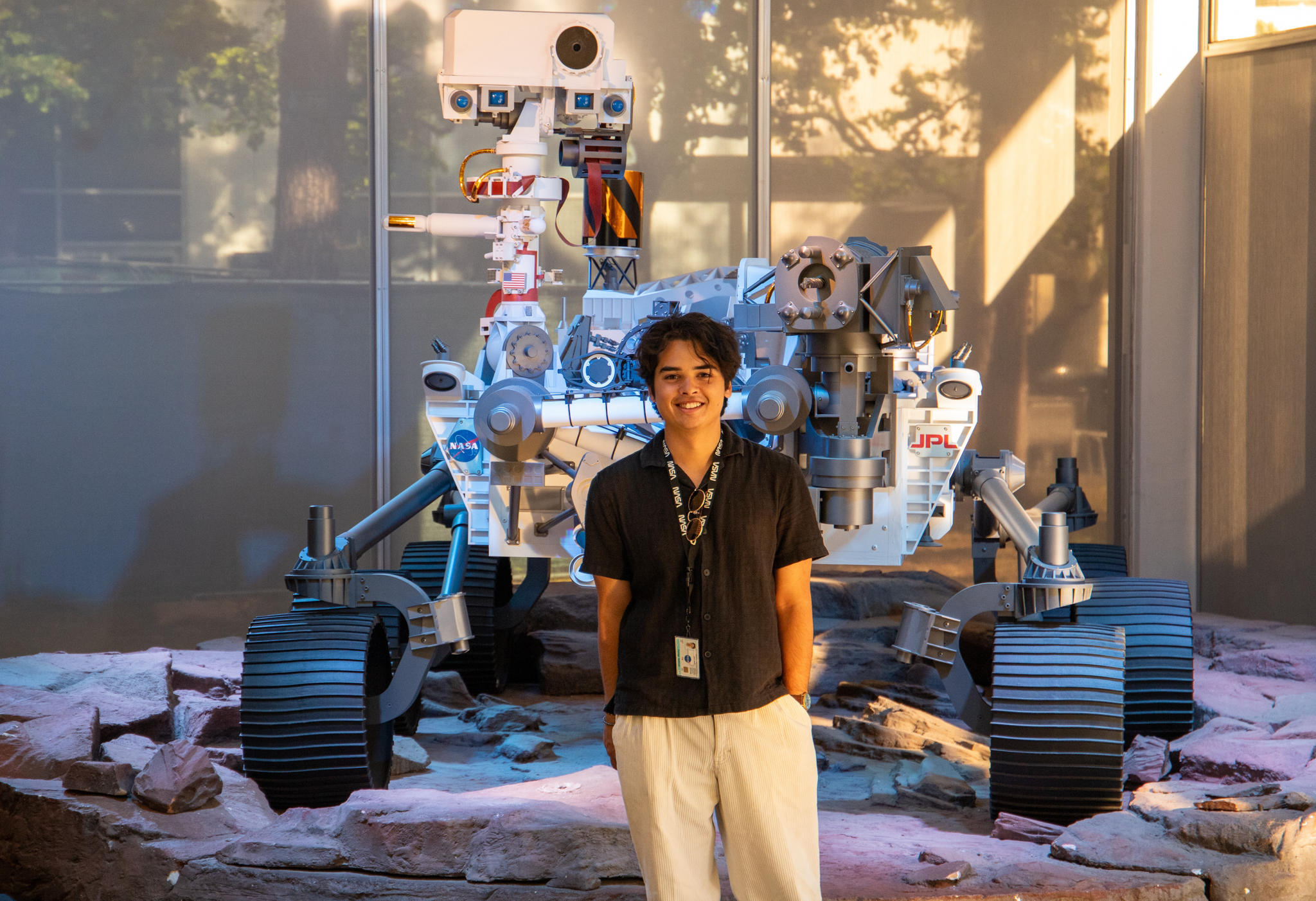
Although Yani’s initial placement through APR.Intern was scheduled for five months, NASA has since extended his contract. This extension has afforded him the time to build on his initial research which will hopefully gain a clearer insight into the conditions required to form the building blocks for life outside Earth.
“We want to know what the chemistry of the ocean and atmosphere was before life had formed on Earth,” he explains. “If we have that information, we can leverage it to look for similar conditions on other planets in our solar system and beyond. Our results suggest that early Earth could have sustained large amounts of methane, a powerful greenhouse gas that would have helped keep the planet from completely freezing over at a time when the Sun was much fainter than it is today.”
“My ANU PhD work is focused on analysing the starlight or spectra that we receive from stars. Whereas here [at NASA], we’re building from a more foundational level — we’re looking at what Earth would have looked like if we could see it four billion years ago, and how light from that Earth would look like if we were observing it through a telescope today. Earth has hosted life for billions of years, but it hasn’t always looked the same. Ultimately, I’m using the astrobiology connection to integrate my NASA findings with my PhD research to make a coherent narrative.”
Yani says that his experience at NASA has felt more like research placement than an actual job — something he believes was a perfect fit for him, “There’s a lot of self-directed weekly meetings with supervisors and anyone else that wants to speak to about your work. My day-to-day duties are self-directed as well, but with the added benefit of being able to meet incredible people within my field and attend interesting talks led by people who are researching the same space.”
“These experiences are instrumental in shaping and empowering Australia’s future space science leaders.”
SRN Co-Director, Prof. Stefan Williams.
Findings
By the end of this year, Yani’s focus will have shifted from his NASA internship to his PhD work at ANU. He believes his time at JPL will prove critical to his academic findings, “It has certainly opened opportunities, for sure,” he says. “This experience will look great on postdoctoral position applications, or whatever I decide to do in the future. NASA is the world leader for this kind of research, so being surrounded by people who are all invested in the same field is something I’ll forever be grateful for.”
Speaking on Yani’s NASA JPL internship, APR.Intern Business Development Manager, Mark Ovens, extended his thanks to all internship partners for their support in advancing space research opportunities through PhD internships, “Yani’s placement demonstrates the impact of university-industry collaboration, and the importance of supporting emerging PhD researchers in space sciences,” he said.
“Thanks to ANU, NSW SRN and NASA JPL, we can foster global connections and advance critical space discovery.”
NSW SRN Internship Program supports HDR students and Early Career Research (ECR) staff from SRN member universities to undertaken paid internships to connect them with domestic and international opportunities.
“Supporting opportunities like Yani’s internship at NASA JPL reflects SRN’s commitment to connecting emerging talent with world-leading research environments. These experiences are instrumental in shaping and empowering Australia’s future space science leaders,” said SRN Co-Director, Professor Stefan Williams.
Media Inquiries:
Robbie Byrne
Marketing, Communications and Events Coordinator, APR.Intern
robbie.byrne@amsi.org.au