Through the APR.Intern program, UTS PhD researcher Duong (Sunny) Nguyen is translating environmental research into practical wastewater treatment solutions, strengthening industry–university collaboration and contributing to the development of technologies to address persistent PFAS contamination.
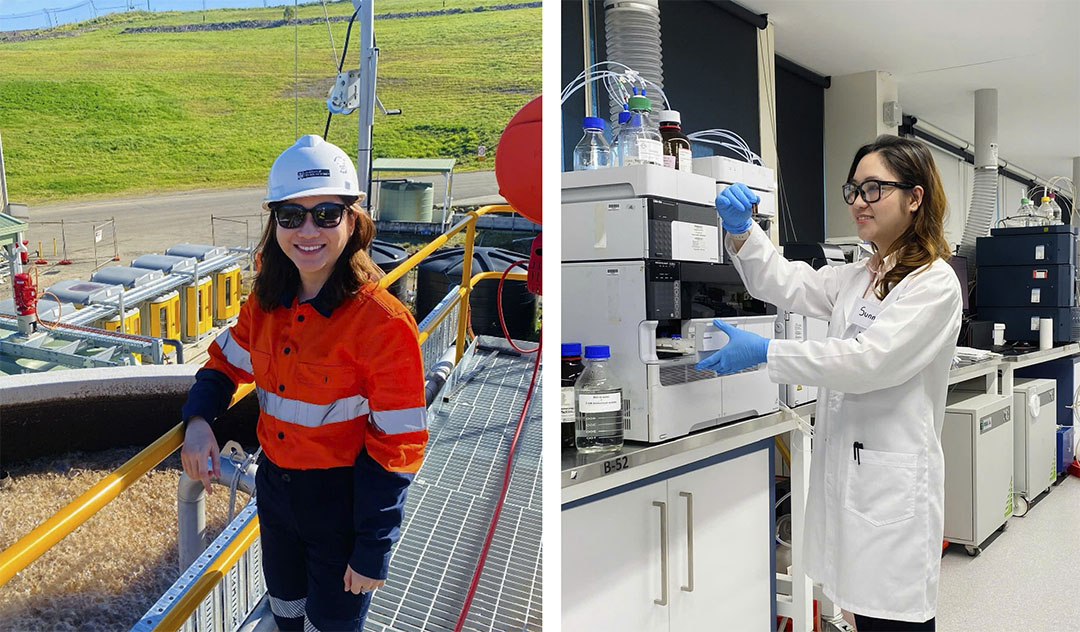
From PhD Research to Environmental Impact
Duong (Sunny) Nguyen is a third-year PhD candidate in Environmental Engineering at the University of Technology Sydney(UTS). Her research focuses on developing a microalgae-based platform that integrates carbon capture, renewable material production and environmental remediation.
Sunny explores technical approaches for producing sustainable biolubricants from microalgal oil and the conversion of spent microalgal biomass into biochar for removing heavy metals and per- and polyfluoroalkyl substances (PFAS) from contaminated water. Her integrated approach supports a circular bioeconomy by turning biomass into valuable products while reducing waste.
Her research has resulted in first-author publications in Q1 peer-reviewed journals, including ACS Sustainable Chemistry & Engineering, Bioresource Technology, Journal of Environmental Chemical Engineering, Environmental Science and Pollution Research, and Science of the Total Environment.
Motivated to translate research into practical environmental solutions, Sunny has actively pursued opportunities to collaborate with industry. In 2025, she began contributing to industry projects with Sydney Water under the supervision of Professor Long Nghiem at UTS, investigating microalgae-related taste and odour issues in drinking water. This work builds directly on her PhD research expertise in microalgae, demonstrating the practical relevance and industry applications of her research.
In early 2026, Sunny was awarded a six-month postgraduate research internship through the APR.Intern program with Aerofloat Australia, where she is contributing to a large-scale PFAS remediation project.
“The scientific rigour of my PhD is guided by real-world impact. I seek opportunities to translate my research into practical applications and work with industry partners to address environmental challenges.”
Duong (Sunny) Nguyen
A Long Journey Worth Taking
Securing the internship was a six-month journey that required patience, preparation and persistence.
Sunny submitted her online application to APR.Intern in July 2025 after discussing the opportunity with her UTS supervisor, Professor Long Nghiem. He encouraged her to apply and provided valuable advice ahead of her interviews.
The selection process included an initial interview with Mark Owen, APR.Intern Business Development Manager, followed by an in-person interview with Ray Anderson, Executive Director and Co-founder of Aerofloat Australia. In December 2025, Sunny received the exciting news that Aerofloat was keen to bring her on board. Her scholarship was subsequently awarded in February 2026.
For Sunny, the experience reinforced an important lesson: opportunities do not always come quickly, and the journey often requires patience, persistence and the support of people who believe in your potential
What began with a single online application opened the door to valuable industry experience, new technical skills and a stronger connection between Sunny’s PhD research and real-world environmental challenges.
Tackling PFAS Challenges with Aerofloat Australia
PFAS are persistent chemicals that pose significant challenges for water and wastewater treatment. Their diverse chemical properties make effective removal difficult, particularly in complex treatment systems.
During her internship, Sunny contributed to a field evaluation of PFAS across wastewater treatment processes and research to develop Aerofloat’s AeroDAF technology towards an AeroFoamFrac configuration for PFAS removal, with potential intellectual property opportunities.
Foam fractionation aims to transfer PFAS from water into a concentrated foam stream, known as foamate, which can then be collected and managed separately. The pilot-scale work is generating insights into treatment performance and operating conditions, supporting further optimisation and evaluation of potentially cost-effective treatment solutions.
The project has enabled Sunny to apply her PhD research expertise in PFAS to a real-world challenge while gaining practical experience in evaluating and developing treatment technologies.
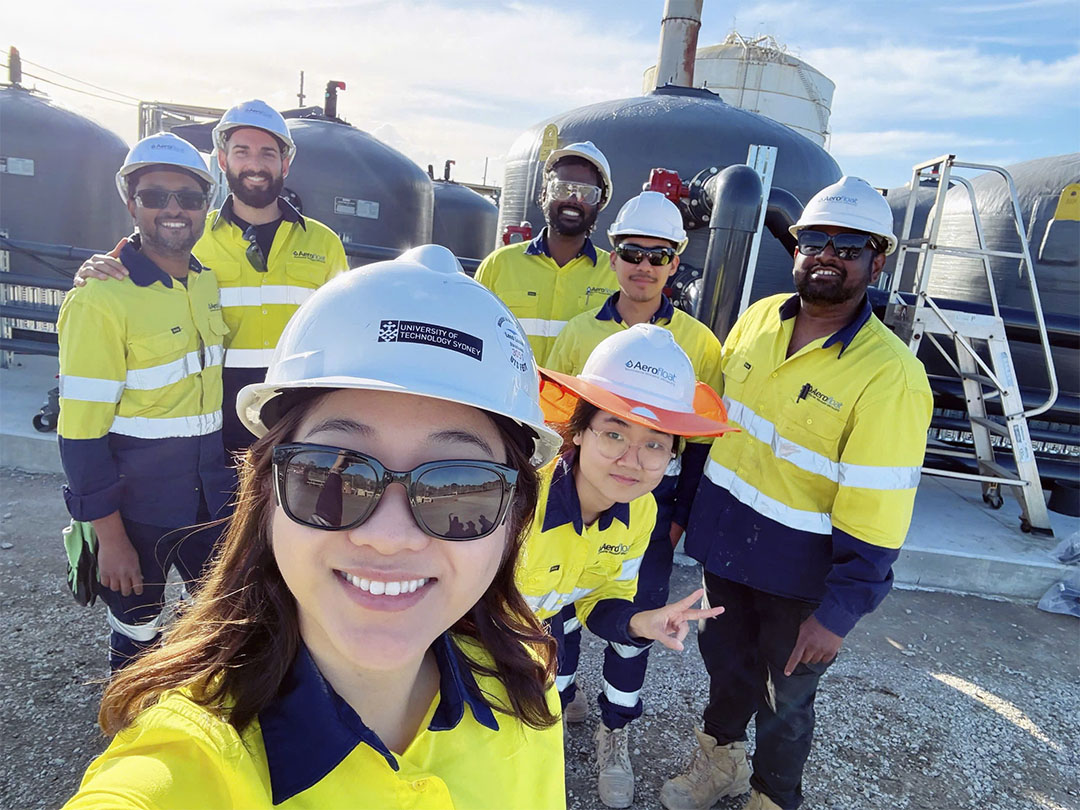
Sunny with the Aerofloat Australia team during her field work activity
Bringing Advanced PFAS Analysis into Practice
A key contribution Sunny brought to the project was her expertise in environmental analytical chemistry.
She applied a PFAS analytical workflow informed by US EPA methods, using solid-phase extraction (SPE) for sample preparation and liquid chromatography–tandem mass spectrometry (LC–MS/MS) for quantification.
Through this work, Sunny further developed her expertise in analysing PFAS in water and solid samples, troubleshooting analytical challenges and generating reliable data to support treatment evaluation.
Importantly, she established PFAS solid-phase extraction, which had not previously been available in the lab. This expands the lab’s capacity to undertake PFAS research and support future industry collaborations. Where analytical requirements can be met internally, this capability also has the potential to reduce reliance on external testing services and associated costs.
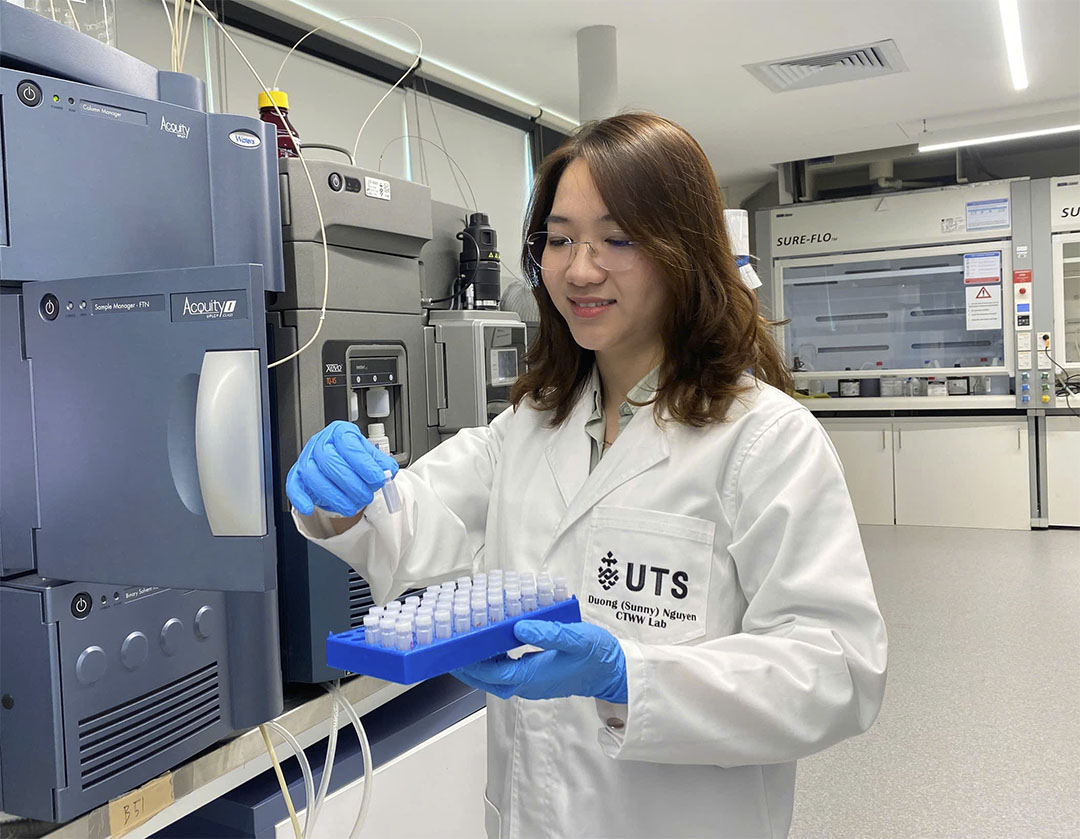
PFAS Analysis at the UTS Centre for Technology in Water and Wastewater (CTWW) Laboratory
“Sunny has successfully applied the scientific rigour and problem-solving skills developed through her PhD training to thrive in an industry environment. She represents UTS exceptionally well, demonstrating the value of academic research in addressing real-world challenges.”
Professor Long Nghiem – Director of the Centre for Technology in Water and Wastewater | University of Technology Sydney
Learning beyond the Lab
Sunny’s internship complements her PhD research on microalgae-derived biochar for PFAS removal by exposing her to alternative treatment technologies and the practical challenges of managing PFAS in complex wastewater systems.
Key highlights were site works on full scale treatment systems and visiting wastewater treatment facilities in Brisbane.
“Before my internship, my experience was mostly in laboratory-based research. The APR internship allowed me to see how treatment technologies operate in real life, understand the challenges faced by industry and connect my experimental results with industrial scale operating conditions.”
Duong (Sunny) Nguyen
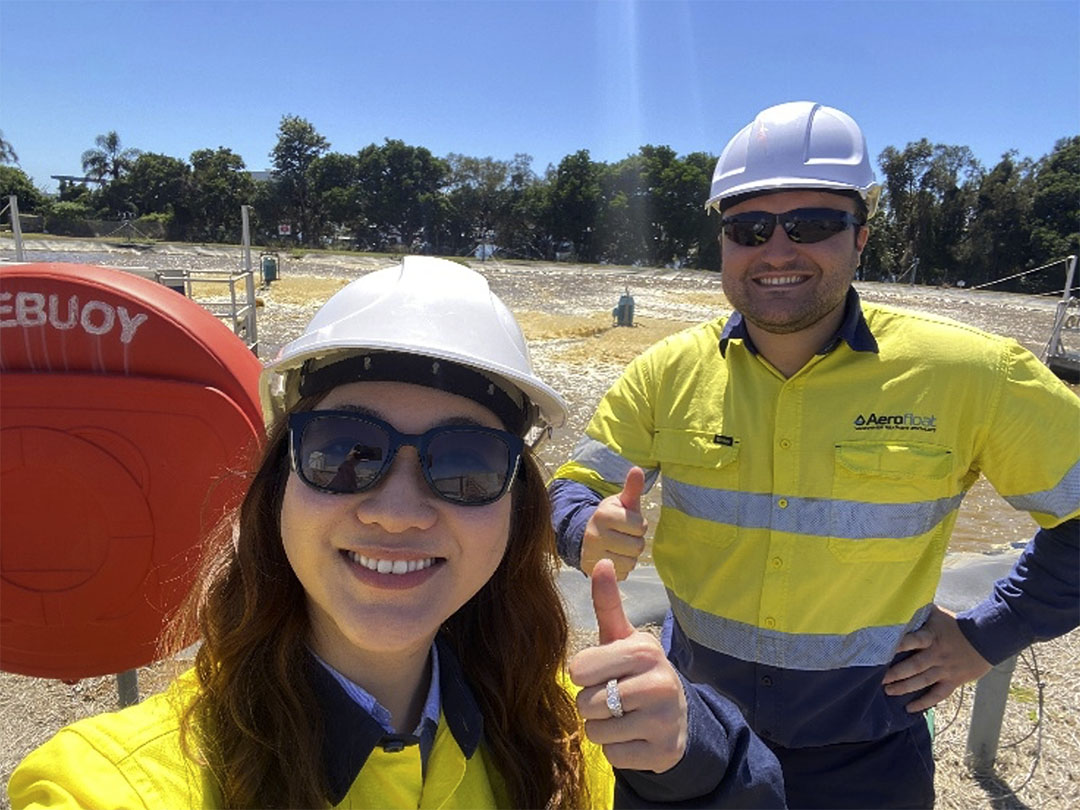
Field Work at a PFAS remediation project in Brisbane
Working alongside Aerofloat’s engineers and technical team broadened Sunny’s understanding of the practical considerations involved in developing engineering solutions, including cost, safety, scalability and operational requirements. The experience also strengthened her confidence in learning new techniques, troubleshooting complex problems and communicating effectively across research and industry teams.
Reflecting on the broader value of the internship, Sunny said:
“The biggest benefit of my internship has been learning how to turn scientific knowledge into practical engineering solutions. It has helped me become more confident in applying my research skills to real-world challenges and shown me the value of collaboration between universities and industry.
“I hope to continue developing practical and cost-effective technologies that make PFAS treatment more sustainable and help address environmental challenges in Australia and beyond.”
“I am grateful to the APR.Intern program for this opportunity and acknowledge the guidance and support of my UTS supervisor, Professor Long Nghiem, my industry manager, Santhosh Ramesh, and the wider UTS and Aerofloat teams.”
From Individual Opportunity to Research Collaboration
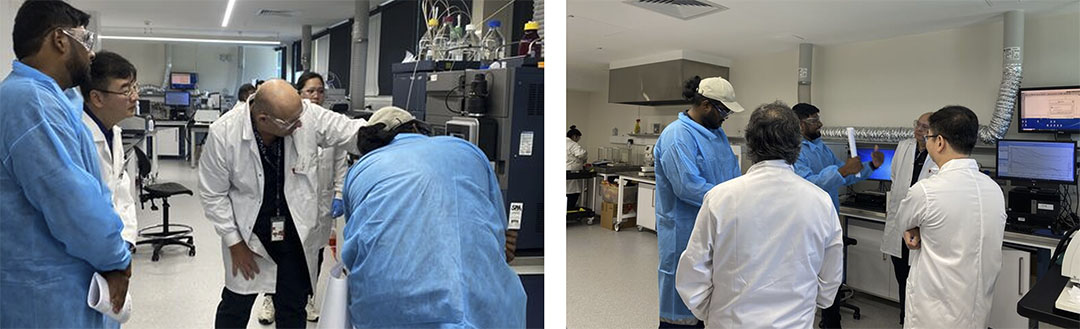
Aerofloat Australia team visits the Centre for Technology in Water and Wastewater at UTS Tech lab
Sunny’s internship has strengthened collaboration between Aerofloat Australia and UTS, bringing together industry needs and university research expertise to support the development of practical PFAS treatment solutions.
Following the award of her internship scholarship in February 2026, Professor Long Nghiem and other representatives from the Centre for Technology in Water and Wastewater (CTWW) met with Ray Anderson and Aerofloat Australia team to discuss opportunities for further research collaboration. These discussions led to a Research Contract between UTS and Aerofloat.
Building on this collaboration, the two organisations also agreed to pursue further PFAS R&D projects through the NSW TechVoucher funding program, creating opportunities to continue working together on practical solutions for PFAS treatment.
Sunny’s internship has also attracted interest across the UTS community, with fellow PhD researchers asking how they could access similar scholarship opportunities. Her experience has gained recognition from UTS Faculty of Engineering and IT and UTS International students, highlighting the value of industry–university partnerships in creating opportunities for research students.
Initially planned for six months, Sunny’s internship has since been extended by Aerofloat Australia, reflecting the company’s interest in continuing the collaboration.
“The research undertaken through this APR.Intern project has provided Aerofloat Australia with valuable technical knowledge and practical insights to inform the development of effective PFAS treatment solutions.”
Santhosh Ramesh – Aftercare Engineering Manager | Aerofloat Australia
Looking Ahead
Through the APR.Intern program, Sunny is building a pathway from academic research to industry application. Her experience is contributing to technology development, strengthening university–industry partnerships and supporting the development of practical solutions to PFAS contamination in Australia.
Media Enquiries:
Angela Thompson
Marketing, Communications and Events Coordinator, APR.Intern
media@amsi.org.au